
An abnormal load only travels with a prefectoral permit, on a route approved by every highway authority. Bridges are almost always its critical point.
Without a guarantee of their load-carrying capacity, the highway authority refuses passage. These refusals are not arbitrary: an old structure designed for lighter loads, defects, no calculation report.
A load-carrying capacity study removes the doubt: it establishes, with calculations to back it up, whether the convoy can cross without damage to the structure, and under what conditions.
Send us the refusal and the convoy data sheet: we contact the highway authority, search the archives, visit the structure if necessary, carry out the calculations, then deliver a report the authority can process. Motorway, departmental or municipal structures: the approach is the same.
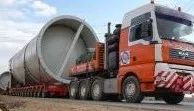
Structural assessment
- Overbridges and underbridges
- Masonry arch bridges, hydraulic structures, corrugated steel culverts
- Ordinary bridges and viaducts in reinforced or prestressed concrete, steel or composite
- Archive search: drawings, calculation reports, inspection reports
- Old loading codes, Fascicule 61 Title II and the Eurocodes
- Finite element modelling / full recalculations
- Limit analysis of masonry arches

Support and advice
- Knowledge of routes and critical bridges: fewer unnecessary studies
- Several hundred structures already assessed for category 3 abnormal loads
- An engineer’s first opinion within about 48 hours
- Preliminary route study: structures to check, type of studies, lead times
- Direct dialogue with highway authorities during the permit process
- In-house calculation tools for the reassessment of structures
- Allowable load limits and load-carrying capacity of structures
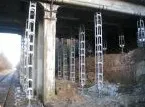
Strengthening
- Alternative solutions when the convoy cannot cross as it stands
- Adapting the convoy: configuration, eccentric positioning, counterweights, crab steering
- Winching, load-spreading plates, crossing at a favourable temperature
- Load-spreading slabs designed for the convoy
- Temporary or permanent strengthening, active or passive propping
- Strengthening with carbon fibre or additional prestressing
- A temporary bridge or an overbridge as a last resort
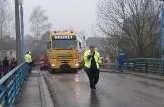
Support during the crossing
- Inspection of sensitive structures before and after the crossing
- Joint condition survey with the highway authority
- Load test to measure actual behaviour
- Road marking of the most favourable path
- On-site control of speed, position and crossing conditions
- Instrumentation for repeated crossings: deflections, strains, crack widths
- Crossing report issued to the haulier and the highway authority
A convoy to get across?
Describe your convoy and your route: we will tell you which structures need checking, what studies are required and how long they will take.
In figures
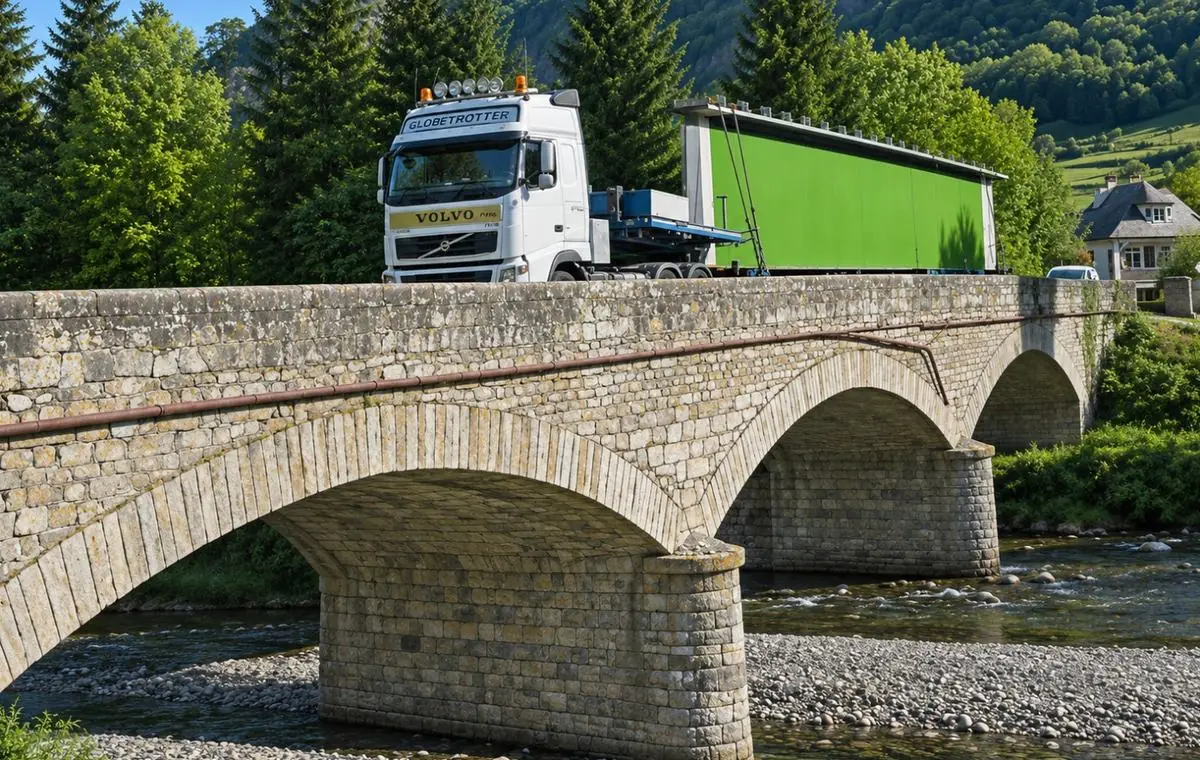
Category 3 convoys are ever more numerous and heavier: wind turbine components, transformers, industrial equipment. We have assessed several hundred structures for convoys from 72 to 700 tonnes gross weight, and each study adds to our database of structures and routes.
- Advanced calculations and models of old or recent structures
- Search for the best crossing conditions
- Alternative solutions: winching, use of the thermal gradient, eccentric crossing, alternate span loading, crab steering…
- Temporary or permanent strengthening: active or passive propping, carbon fibre, temporary bridge…
- Investigations before, during and after the crossing: inspections, load tests, instrumentation
- Fatigue analysis of the most heavily loaded steel structures
Related projects
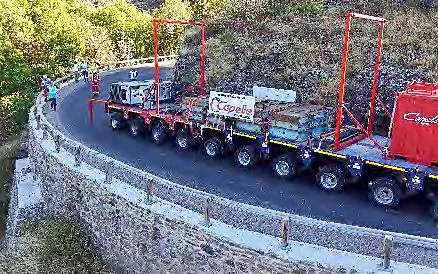 Abnormal load route in Lozère: 123 structures assessedPied-de-Borne and Villefort (48)
 Load capacity of the Juvigny-sur-Seulles bridgeJuvigny-sur-Seulles (14)
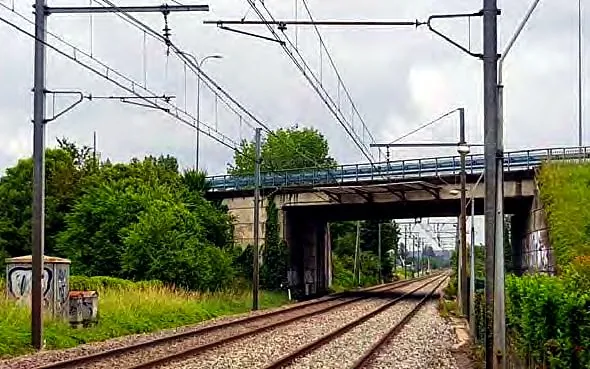 Colayrac bridge: expert appraisal before the crossing of 685 t convoysColayrac-Saint-Cirq (47)
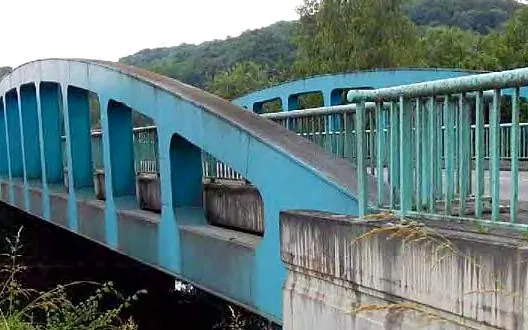 Abnormal loads: load capacity of structures throughout FranceThroughout France
 Riou Bourdou bridge: crossing of 110 t loadsSavines-le-Lac (05)
 Sioule viaduct (A89): crossing of wind turbine componentsBromont-Lamothe (63)