
Reinforced or prestressed concrete, steel, masonry, timber or composites: every structure ages, and each in its own way.
Before repairing, you have to understand. A misread defect leads to a pointless repair, and sometimes to a worse one.
Our diagnosis therefore goes back to the causes: original design, materials, actual loads, maintenance, environment. We then reassess the structure with its actual properties, and design the repair or strengthening that is strictly necessary.
Investigations are specified and managed by our engineers and carried out with specialist laboratories (Cerema, LERM, ADISS…).
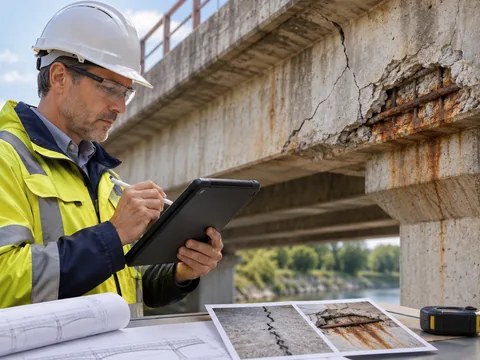
Diagnosis
- Concrete pathologies: carbonation, reinforcement corrosion, alkali-aggregate reaction (AAR), delayed ettringite formation (DEF)
- Original design or construction defects
- Traffic loads exceeding the design loads
- Lack of maintenance, poorly designed alterations or works
- Impacts, scour, floods, accidents and vandalism
Investigations
- Material characterisation, coring and laboratory testing
- Carbonation depth, chloride content, corrosion potential
- Radar detection of reinforcement, gamma radiography, ultrasonic testing
- Prestressing tendon force: crossbow test, stress release
- Levelling, static and dynamic load tests
- Infrared thermography, void detection, asbestos and lead surveys

Repair
- Deck waterproofing, drainage and run-off
- Corrosion protection of steel structures
- Strengthening with carbon fibre fabrics or additional prestressing
- Patch repairs, rebar passivation, repointing of masonry
- Foundation strengthening, grouting of voids and masonry

Monitoring
- Periodic or enhanced inspection programmes matched to the risk
- Detailed inspections with defect mapping
- Crack and deformation monitoring with gauges and sensors
- Levelling and deflection measurements, unloaded and under load
- Instrumentation with continuous data acquisition and remote transmission
Existing structures
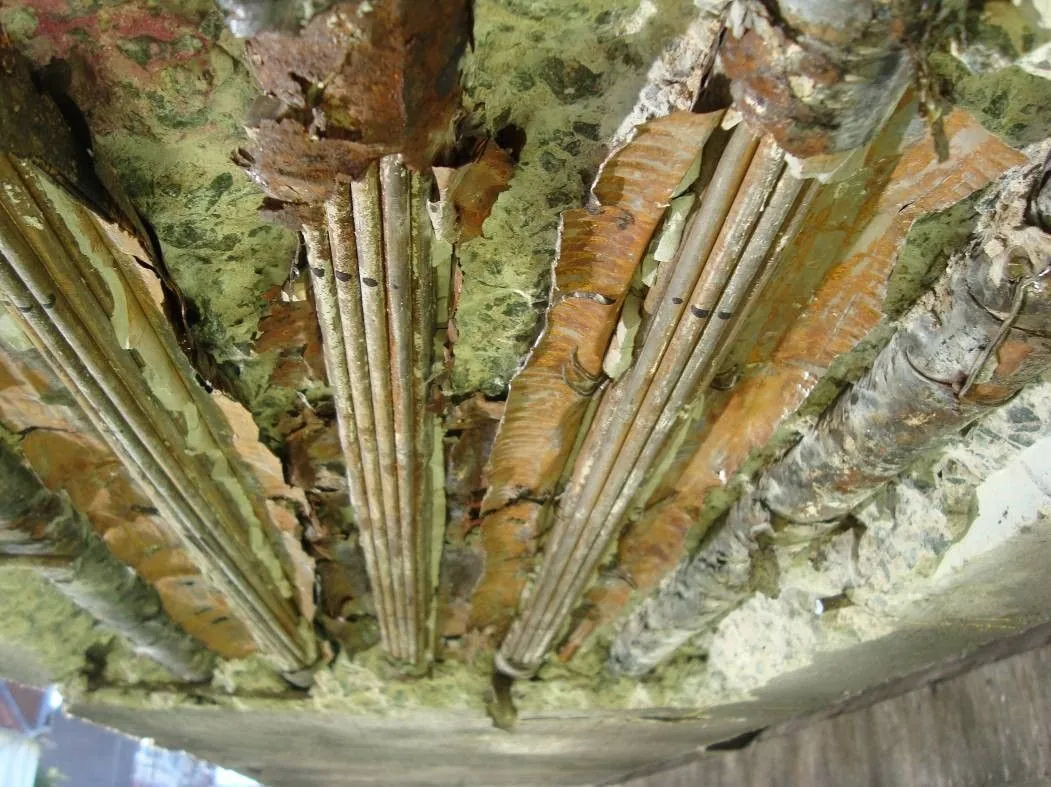
An ageing stock, tight budgets and the need to keep traffic moving often make rehabilitation preferable to reconstruction, even for badly deteriorated structures. Our engineers know the old loading and design codes and the construction techniques of each period: that is what makes it possible to read an existing structure correctly and give it back a safe capacity, at the lowest cost.
- Full multi-criteria diagnosis, definition and management of additional investigations
- General rehabilitation or requalification studies
- Reassessments and load capacity studies under specific loads
- Periodic or enhanced monitoring programmes, targeted testing
- Periodic visits and detailed inspections, IQOA ratings, baseline surveys
- Load test reports and management of load tests
- Jacking and replacement of bearings
- Strengthening by external post-tensioning
- Strengthening with carbon fibre fabrics (CFRP)
- Repair and widening of masonry bridges
- Upgrading of parapets and vehicle restraint systems
- Renewal of bridge equipment and superstructures
Related projects
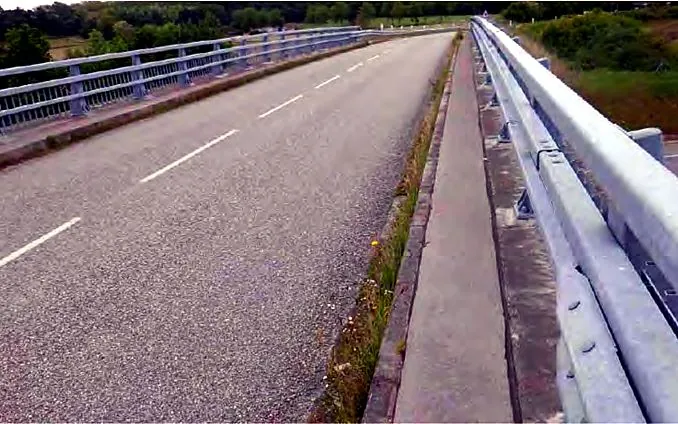 A64 and A66 motorways: refurbishment of bridgesASF network
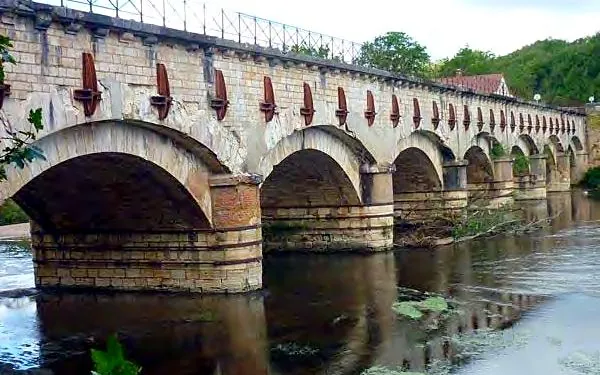 Conversion of the Tranchasse canal bridge into a cycle routeColombiers et Ainay-le-Vieil (18)
 A28 motorway: detailed inspections and diagnosis for ALISA28 motorway, between Rouen and Alençon
 A62 and A10 motorways: replacement of joints and bearingsASF network
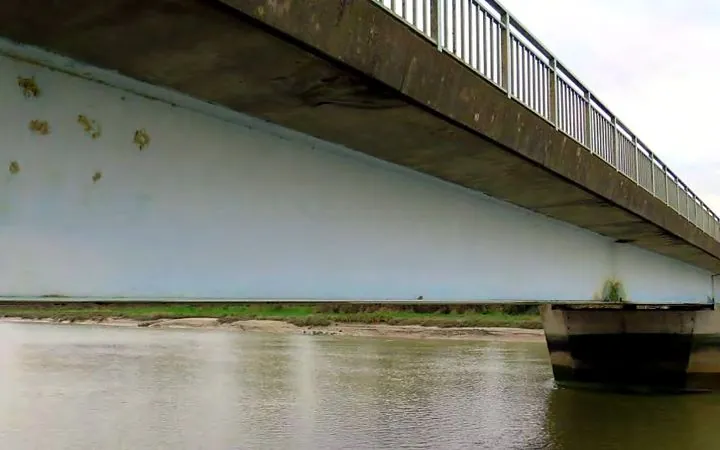 Rehabilitation of the Ranville bridge over the OrneRanville (14)
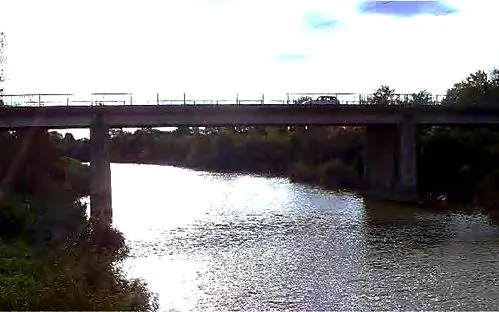 Rehabilitation of the Colombelles bridge (VIPP) over the OrneColombelles (14)