Konrad Wachsmann
1901–1980 · Industrial prefabrication and tubular space frames with universal nodes
A German architect who emigrated to the United States, Konrad Wachsmann made prefabrication and tubular steel space frames a field of research, from Einstein’s timber house to giant hangars.
Biography
Born on 16 May 1901 in Frankfurt an der Oder, Konrad Wachsmann first trained as a carpenter, then studied architecture. He ran the design office of a timber house manufacturer, for which he built Albert Einstein’s summer house at Caputh in 1929.
Emigrating to the United States in 1941, he developed a prefabricated house system with Walter Gropius, then taught, notably at the University of Southern California. He died in Los Angeles on 25 November 1980.
What he invented or proved
Wachsmann saw construction as the assembly of standardised industrial components joined by universal nodes. For the US Air Force he studied very long-span hangars as tubular space frames.
His book “Wendepunkt im Bauen” (“The Turning Point of Building”) influenced generations of architects and engineers.
His works
- Albert Einstein’s summer house (1929), Caputh, in prefabricated timber.
- Packaged House System (1942), with Walter Gropius.
- Studies of space-frame hangars for the US Air Force (1950s).
- Wendepunkt im Bauen (1959).
What we owe Konrad Wachsmann
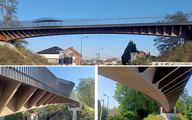
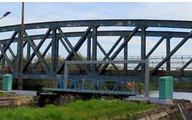
Standardising connections to make construction more reliable: an idea we find in modern steel bridges, where connection design governs durability.
Sources
- Encyclopædia Britannica, « Konrad Wachsmann »
- Akademie der Künste, Berlin, archives Konrad Wachsmann
- Einsteinhaus Caputh, histoire de la maison
Tester mes connaissances sur les grands bâtisseurs
See also
In our projects
A few structures of the same type studied by THEOREMS.