Shigeru Ban
1957– · Cardboard-tube and timber structures; emergency architecture
A Japanese architect, Shigeru Ban turned the cardboard tube into a structural material, built emergency shelters for disaster victims and even a cardboard bridge at the foot of the Pont du Gard.
Biography
Born on 5 August 1957 in Tokyo, Shigeru Ban studied architecture in the United States, notably at the Cooper Union in New York. He opened his practice in Tokyo in 1985, then offices in Paris and New York.
He received the Pritzker Prize in 2014 for his architecture and humanitarian commitment.
What he invented or proved
Shigeru Ban works with engineers to make structures carried by recycled cardboard tubes, timber gridshells or light, reusable materials. He designs shelters that can be erected quickly after earthquakes and wars.
For the 2000 Hanover World Expo he designed with Frei Otto a Japanese pavilion as a gridshell of cardboard tubes.
His works
- Paper Log Houses after the Kobe earthquake (1995).
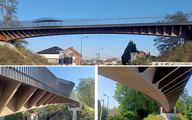
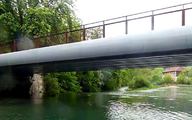
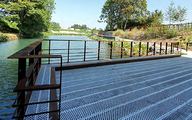
- Paper bridge over the Gardon, near the Pont du Gard (2007).
- Centre Pompidou-Metz (2010), a timber gridshell, and the Cardboard Cathedral in Christchurch (2013).
What we owe Shigeru Ban
Temporary structures, demountable footbridges, bio-based materials: his work challenges our practices of frugal and reversible design.
Sources
- Fondation Hyatt, prix Pritzker 2014, « Shigeru Ban »
- Shigeru Ban Architects, « Paper Bridge » (2007)
- Centre Pompidou-Metz, architecture du bâtiment
Tester mes connaissances sur les grands bâtisseurs
See also
In our projects
A few structures of the same type studied by THEOREMS.