Alan G. Davenport
1932–2009 · Statistical approach to wind and the gust factor; boundary-layer wind tunnel (1965)
A Canadian engineer, Alan Garnett Davenport founded modern wind engineering: a statistical approach to gusts and boundary-layer wind tunnel testing of towers and long bridges.
Biography
Born on 19 September 1932 in Madras, India, Alan Garnett Davenport studied at Cambridge, the University of Toronto and Bristol. In 1965 he founded the Boundary Layer Wind Tunnel Laboratory at the University of Western Ontario in London, Canada.
He died on 19 July 2009.
What he invented or proved
Davenport described wind as a random phenomenon: he related the gust spectrum to the structure’s dynamic response and derived a gust factor. This statistical approach underpins wind codes.
In his wind tunnel, which reproduces turbulent wind near the ground, he studied the largest structures of his time.
His work
- Boundary Layer Wind Tunnel at the University of Western Ontario (1965).
- Wind studies of the World Trade Center towers and the Sears Tower.
- Studies of the Akashi Kaikyo and Tsing Ma suspension bridges.
What we owe Alan G. Davenport
The gust factors in Eurocode 1 on wind descend from his approach; we apply them to decks, slender piers and footbridges.
Sources
- Western University, Boundary Layer Wind Tunnel Laboratory, « Alan G. Davenport »
- A. G. Davenport, « The application of statistical concepts to the wind loading of structures », Proceedings ICE (1961)
- Royal Society of Canada, « Alan Garnett Davenport »
Tester mes connaissances sur les grands bâtisseurs
See also
In our projects
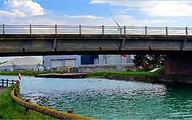
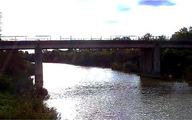
A few structures of the same type studied by THEOREMS.