John Rennie
1761–1821 · Waterloo (1817) and Southwark (1819) bridges; canals, docks and the Plymouth Breakwater
A Scottish engineer, John Rennie built the Waterloo and Southwark bridges in London, canals, docks and the Plymouth Breakwater.
Biography
Born on 7 June 1761 at Phantassie, East Lothian, John Rennie learned mechanics from the millwright Andrew Meikle, then studied at the University of Edinburgh. He came into contact with James Watt and equipped the Albion Mills in London with steam engines.
He went on to design canals and their aqueducts, London docks, harbours and bridges. He died in London on 4 October 1821 and is buried in St Paul’s Cathedral.
His son, John Rennie the Younger, would complete his last project, the new London Bridge.
What he invented or proved
Rennie brought great elegance to masonry bridges, with elliptical granite arches and level decks. He also used cast iron on a large scale: Southwark Bridge crossed the Thames with a central arch of about 73 metres.
At Plymouth he designed a rubble breakwater more than a mile and a half long, built in open sea to shelter the sound.
His works
- Lune Aqueduct (1797), Lancaster Canal.
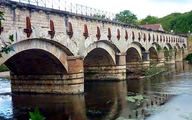
- Kennet and Avon Canal (1810) and its Dundas and Avoncliff aqueducts.
- Waterloo Bridge (1817), London: nine elliptical granite arches.
- Southwark Bridge (1819), London: cast-iron arches.
- Plymouth Breakwater (begun 1812) and the design of the new London Bridge.
What we owe John Rennie
Masonry bridges, canal aqueducts, harbour works: his work covers almost every type of old structure we inspect, with the same underlying question, the behaviour of foundations in water.
Sources
- Structurae, fiche « John Rennie »
- Institution of Civil Engineers, « John Rennie »
- Oxford Dictionary of National Biography, « Rennie, John (1761–1821) »
- Encyclopædia Britannica, « John Rennie »
Tester mes connaissances sur les grands bâtisseurs
See also
In our projects
A few structures of the same type studied by THEOREMS.