Louis Vicat
1786–1861 · Law of hydraulicity and artificial cement (1817)
A French government civil engineer, Louis Vicat unlocked the secret of how limes and cements set. Without him there would be no artificial cement — and without cement, neither reinforced nor prestressed concrete.
Biography
Born in Nevers on 31 March 1786 into a modest family, Louis Vicat entered the École polytechnique in 1804 and the École des ponts et chaussées in 1806. After a first posting in Périgueux, he was sent in 1812 to Souillac, in the Lot, to build a bridge over the Dordogne: a river prone to violent floods, where the piers had to be founded in the water.
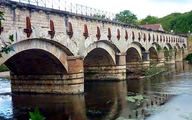
The Napoleonic wars halted the works, and Vicat used the time to study building limes. His “Experimental research on building limes, concretes and ordinary mortars”, published in 1818, was endorsed by the Académie des sciences. Completed in 1822, the Souillac bridge was the first structure built with an artificial hydraulic lime; it is still in service and now bears his name.
Chief engineer of the Isère department from 1827, he also directed the construction of the Argentat suspension bridge over the Dordogne (1828–1829). He became inspector general in 1853, the year his son Joseph founded the cement company that bears their name. He died in Grenoble on 10 April 1861. His name is one of the 72 engraved on the Eiffel Tower.
What he invented or proved
In 1817 Vicat established the law of hydraulicity: a lime’s ability to harden under water comes from the right proportion of limestone and clay. He concluded that it could be manufactured by burning a measured mixture of the two — the “artificial lime”, soon called artificial cement.
He then surveyed France for clayey limestones suited to its production and advised architects and contractors. He also gave his name to the Vicat needle, the apparatus that measures the setting time of cements.
His works
- Souillac bridge over the Dordogne (1812–1822), now the Louis-Vicat bridge: seven arches founded in a torrential river.
- Argentat suspension bridge over the Dordogne (1828–1829).
- Experimental research on building limes, concretes and ordinary mortars (1818).
- Summary of positive knowledge on calcareous mortars and cements (1828).
What we owe Louis Vicat
Every concrete structure we assess, recalculate or repair rests on his discovery. And the hydraulic binders we specify to repoint, grout and strengthen masonry bridges are the direct heirs of his limes.
Sources
- Structurae, fiche « Louis-Joseph Vicat »
- Fondation Louis Vicat, plaquette de présentation (2018)
- École polytechnique, « 225 ans, 225 histoires » : Louis Vicat
- By Béton, « Un ouvrage solide contre les crues torrentielles » (pont Louis-Vicat)
Tester mes connaissances sur les grands bâtisseurs
See also
In our projects
A few structures of the same type studied by THEOREMS.