Marc Seguin
1786–1875 · Suspension bridges with parallel iron-wire cables (1825); multi-tubular boiler
A tireless inventor, Marc Seguin replaced the chains of suspension bridges with iron-wire cables: the principle behind every great modern suspension bridge.
Biography
Born in Annonay on 20 April 1786, Marc Seguin was the great-nephew of the Montgolfier brothers; Joseph de Montgolfier passed on to him a taste for mechanics. He first worked in the family cloth and felt business with his brothers.
From 1822 he studied the strength of iron wire and threw a first cable-suspended footbridge over the Cance at Annonay. In 1823 he took part in the Saint-Antoine footbridge in Geneva with Guillaume-Henri Dufour. On 25 August 1825 his bridge over the Rhône between Tain-l’Hermitage and Tournon opened: France’s first road bridge suspended from iron-wire cables. With his brothers he went on to build dozens of suspension bridges.
He then invented the multi-tubular boiler, which multiplied the power of locomotives, and with his brothers obtained the concession for the Saint-Étienne–Lyon railway. Elected a corresponding member of the Académie des sciences in 1845, he died in Annonay on 24 February 1875.
What he invented or proved
Seguin showed by testing that bundles of parallel iron wires were stronger, lighter and safer than the bars and chains then in use: one failed wire does not compromise the cable. This is the principle of the parallel-wire cables of all the great suspension bridges that followed.
As much an industrialist as an engineer, he standardised the construction of toll-financed suspension bridges and made it a process that could be repeated throughout France.
His works
- Footbridge over the Cance, Annonay (1822), his first cable-suspended footbridge.
- Saint-Antoine footbridge, Geneva (1823), with Guillaume-Henri Dufour.
- Tain–Tournon suspension bridge over the Rhône (1825): two spans of about 85 m.
- Multi-tubular boiler for locomotives (1827) and the Saint-Étienne–Lyon railway.
What we owe Marc Seguin
The 19th-century suspension bridges still in service, many of them now footbridges, call for careful inspection and recalculation: condition of the cables and hangers, anchorages, behaviour under today’s loads. That is where we meet his legacy.
Sources
- Structurae, fiche « Marc Seguin »
- Encyclopædia Universalis, « Seguin Marc (1786–1875) »
- Encyclopædia Britannica, « Marc Seguin, the Elder »
- La Poste, notice du timbre « Marc Seguin » (1986)
Tester mes connaissances sur les grands bâtisseurs
See also
In our projects
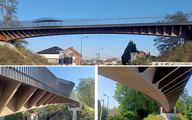
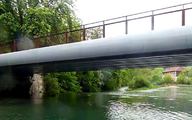
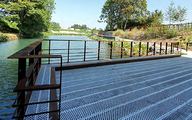
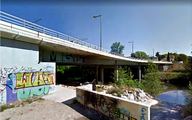
A few structures of the same type studied by THEOREMS.