Wilhelm Ritter
1847–1906 · Applications of graphic statics; teacher of Maillart and Ammann
Culmann’s successor in Zurich, Wilhelm Ritter made graphic statics an engineering discipline and trained Robert Maillart and Othmar Ammann.
Biography
Born on 14 April 1847 in Liestal, Karl Wilhelm Ritter studied at the Federal Polytechnic in Zurich, graduating first in 1868. After working on a railway in Hungary, he became Carl Culmann’s assistant.
A professor at the Riga Polytechnic from 1873 to 1882, he returned to Zurich to succeed Culmann and taught graphic statics, bridges and railways there until 1905; he was rector from 1887 to 1891. He died on 18 October 1906 at Rämismühle, near Zurich.
He wrote many expert reports, including one on the collapse of the Münchenstein railway bridge in 1891.
What he invented or proved
Ritter developed the applications of Culmann’s graphic statics: forces in beams, trusses, continuous beams, arches. He also studied the design of tunnel linings and of suspension bridge stiffening girders, and was among the first to study reinforced concrete in the Hennebique system.
He stressed the place of aesthetics in the education of engineers, a lesson his students would remember.
His works and books
- Die Statik der Tunnelgewölbe (1879).
- Anwendungen der graphischen Statik, four volumes (1888–1906).
- Die Bauweise Hennebique (1899), a study of reinforced concrete.
- Expert report on the Münchenstein bridge (1891).
What we owe Wilhelm Ritter
Reading the load path in a structure before calculating it: this Zurich school, which he passed on to Maillart and Ammann, remains our way of checking a numerical model with simple reasoning.
Sources
- Dictionnaire historique de la Suisse, « Ritter, Karl Wilhelm » (R. Mumenthaler)
- Structurae, fiche « Wilhelm Ritter »
- D. P. Billington, « Wilhelm Ritter: Teacher of Maillart and Ammann », Journal of the Structural Division, ASCE (1980)
- Schweizerische Bauzeitung, nécrologie (vol. 48, 1906)
Tester mes connaissances sur les grands bâtisseurs
See also
In our projects
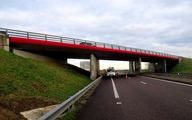
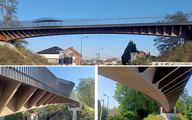
A few structures of the same type studied by THEOREMS.