Pierre-Paul Riquet
1609–1680 · Canal du Midi (1666–1681) and its supply from the Saint-Ferréol basin
A salt-tax farmer in Languedoc, Pierre-Paul Riquet designed and had dug the Canal du Midi, linking the Garonne to the Mediterranean, with the first large reservoir and the first canal tunnel.
Biography
Born on 29 June 1609 in Béziers, Pierre-Paul Riquet made his fortune collecting the salt tax in Languedoc. Fascinated by the old idea of a canal between the Atlantic and the Mediterranean, he spent years studying the Naurouze pass and the streams of the Montagne Noire.
He won over Colbert and in 1666 obtained Louis XIV’s authorisation to build the canal, which he partly financed himself. Up to twelve thousand workers laboured on it.
He died in Toulouse on 1 October 1680, a few months before the canal was fully filled in 1681.
What he invented or proved
Riquet solved the key problem: supplying water to the canal’s summit. He captured the streams of the Montagne Noire with a feeder channel and stored them in the Saint-Ferréol basin, closed by a large earth and masonry dam.
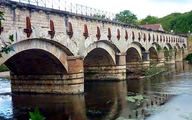
The canal has dozens of locks, canal bridges and, at Malpas, the first tunnel dug for a navigable canal.
His works
- Canal du Midi (1666–1681), from Toulouse to the Étang de Thau: about 240 kilometres.
- Saint-Ferréol basin and dam, the feeder reservoir.
- Malpas tunnel (1679), the first canal tunnel.
- Feeder channels of the Montagne Noire and the plain, bringing water to the Naurouze pass.
What we owe Pierre-Paul Riquet
Canal bridges, locks, earth dams, masonry bridges over canals: these old hydraulic works call for assessments that account for water, watertightness and foundation soils, as we do on river structures.
Sources
- Unesco, « Canal du Midi » (1996)
- Voies navigables de France, histoire du canal du Midi
- Structurae, fiche « Canal du Midi »
Tester mes connaissances sur les grands bâtisseurs
See also
In our projects
A few structures of the same type studied by THEOREMS.